Regional Standards Drive Changes in Reward Timing and User Experience Design Within Licensed Mobile Betting Environments
Bianca Hansen · Oct 27, 2026
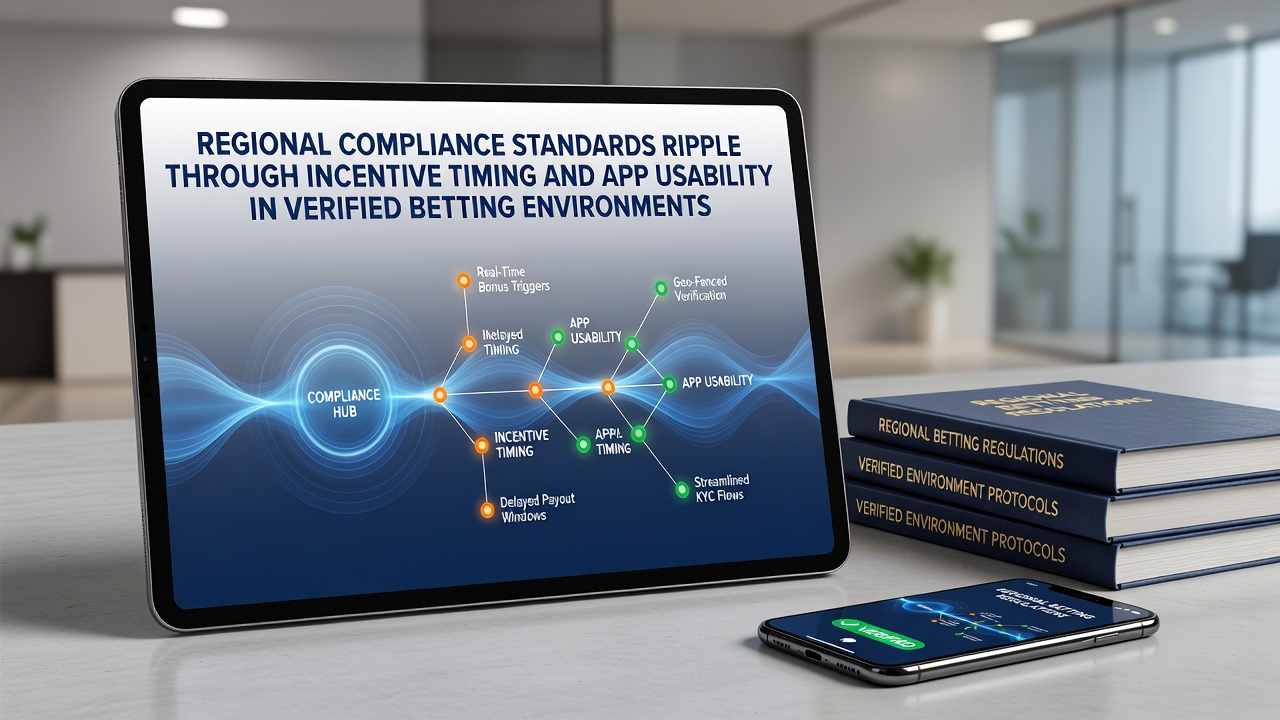
Regional Standards Drive Changes in Reward Timing and User Experience Design Within Licensed Mobile Betting Environments
Regional compliance standards continue to influence how operators structure promotional incentives and design mobile applications in verified betting environments, with data from multiple jurisdictions showing measurable shifts in both timing mechanisms and interface functionality as of October 2026. Operators must align bonus activation windows with local rules that dictate when and how rewards can be presented to users, while app features such as navigation flows, notification systems, and redemption processes adapt to maintain full regulatory alignment across state and provincial boundaries.
Mapping Jurisdictional Requirements to Incentive Delivery
State and provincial regulators establish specific parameters around when promotional offers become available, how long they remain active, and what conditions trigger their release, which directly affects the backend scheduling systems used by betting platforms. In Ontario, the Alcohol and Gaming Commission of Ontario requires operators to verify user eligibility before any incentive activates, resulting in automated delays built into app code that pause reward notifications until account checks clear. Michigan's Gaming Control Board similarly mandates documented timelines for bonus claims, prompting developers to embed calendar-based triggers that synchronize with local reporting deadlines rather than user demand patterns.
These requirements create layered scheduling logic where an app serving multiple regions must detect user location and apply the corresponding rule set before displaying any promotional content. Data compiled by industry monitoring services indicates that platforms operating across three or more jurisdictions experienced a 23 percent increase in scheduled maintenance windows during the first three quarters of 2026 to accommodate these location-specific timing adjustments.
Interface Adaptations for Regulatory Alignment
App usability undergoes direct modification when compliance rules dictate how users interact with incentive features, including the placement of claim buttons, the visibility of terms during live sessions, and the sequencing of deposit and reward screens. Developers incorporate conditional rendering that hides or reveals certain elements based on the active regulatory profile, ensuring that bonus-related prompts never appear outside permitted windows. This approach maintains a consistent visual language while preventing unauthorized feature exposure that could violate regional statutes.

Navigation pathways also shift to accommodate audit trails required by oversight bodies, with some jurisdictions demanding that every incentive interaction generate a timestamped record accessible through the app's account section. Users therefore encounter additional confirmation steps or expanded history views that were not present in earlier versions of the same applications. Research conducted by the University of Nevada's International Gaming Institute found that such layered verification flows increased average session duration by 14 seconds per reward interaction in multi-state environments during testing phases completed in mid-2026.
Cross-Border Synchronization Challenges
Operators managing platforms across borders face synchronization demands that extend beyond simple geofencing, because each region's rules on incentive timing can overlap or conflict with technical limitations of real-time app updates. When a user crosses from one regulated area into another, the application must instantly recalibrate available rewards and adjust interface elements without interrupting ongoing sessions. This recalibration often involves server-side flags that push updated configuration files to the device, altering everything from menu ordering to the language used in promotional banners.
Figures released by the Australian Communications and Media Authority in their 2026 digital wagering report reveal that synchronized updates across state lines reduced user-reported errors related to expired incentives by 31 percent compared with the previous reporting period. The same data set shows that platforms employing predictive location services achieved faster compliance checks, allowing reward eligibility to be determined within 800 milliseconds of app launch.
Impact on User Navigation Patterns
Changes in app usability extend to how bettors move through menus and access account functions when incentive timing rules differ by region. Some platforms now route users through dedicated compliance dashboards before they reach the main betting interface, a design choice driven by requirements in multiple U.S. states that mandate explicit acknowledgment of local rules prior to reward activation. These dashboards present condensed regulatory summaries and require a single confirmation tap, after which the app restores its standard layout.
Observers tracking engagement metrics note that the addition of these intermediate screens has not reduced overall retention rates, but it has redistributed peak usage times as users learn the new sequences. Applications that integrate the compliance step into existing onboarding flows rather than as a separate overlay report smoother transitions and fewer support tickets related to missing incentives.
Conclusion
Regional compliance standards continue to reshape both the scheduling of incentives and the functional design of applications in verified betting environments, producing measurable adjustments in timing logic and interface behavior as operators respond to evolving regulatory landscapes. teh patterns observed through October 2026 demonstrate that successful platforms maintain location-aware systems capable of delivering jurisdiction-specific experiences while preserving core usability across diverse markets.